
Imagine: The Future of Women in Fishing
Season 1- Episode 2
Episode Notes
Why Women in Fishing Must Unite to Be Seen, Supported, and Sustained
There is a difference between being invited along for the ride—and being handed the wheel.
Episode 2 of Mayfly Rising challenges us to think bigger about what it means to truly belong in the fishing industry—and what it will take for women not just to enter the sport, but to stay.
At the heart of this conversation is a powerful truth:
The issue isn’t getting women into fishing—it’s keeping them here.
The “Leaky Bucket”
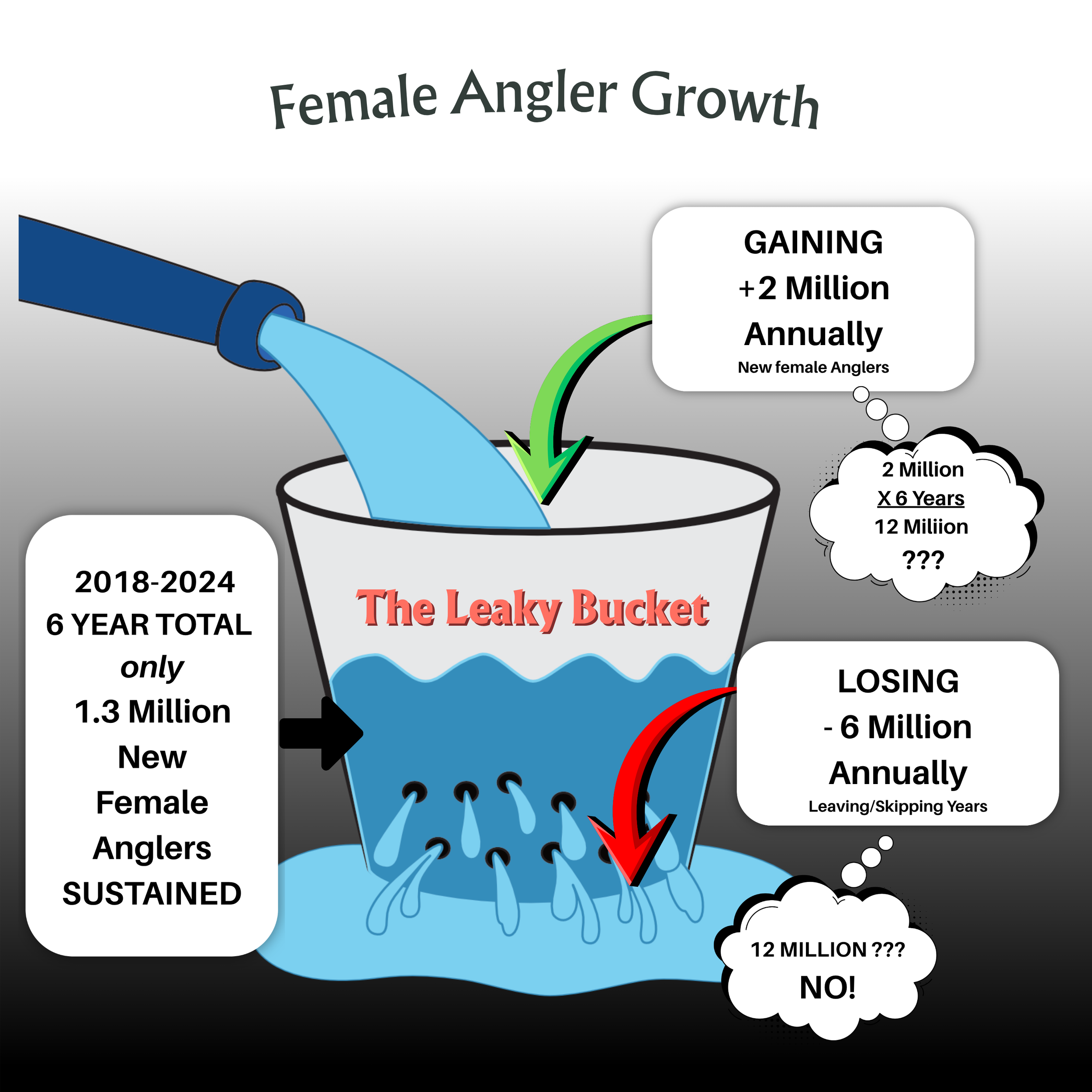
Women now make up roughly 37% of all anglers, with nearly 2 million new women entering the sport each year.
But at the same time, over 6 million women are leaving annually.
This creates what Kimberly calls a “leaky bucket.” While growth is happening at the top, retention is failing at the base. The result? A demographic that appears to be growing—but is actually struggling to sustain itself.
Why the Industry Isn’t Investing
Despite being labeled the “fastest-growing demographic,” women anglers remain underrepresented in gear, retail space, sponsorships, and leadership.
Why?
Because we are difficult to define—and even harder to reach.
As women, we don’t just segment by fishing style—we divide into increasingly small, isolated groups. From gear preferences to social identity, these micro-cliques fracture our collective presence, making it challenging for brands and organizations to understand our value.
And in an industry that measures value in numbers, visibility, and return on investment—what cannot be defined is rarely prioritized.
The Cost of Division
Individually, women are navigating real barriers:
Limited access to properly designed gear
Lack of visibility in retail and media
Unequal pay and support in guiding and education
Financial strain for competitive anglers
Safety and confidence challenges on the water
But collectively, we hold power.
When we divide ourselves into smaller and smaller circles, we reduce that power—turning a strong 37% into a fraction of influence.
Understanding the Female Angler Demographic
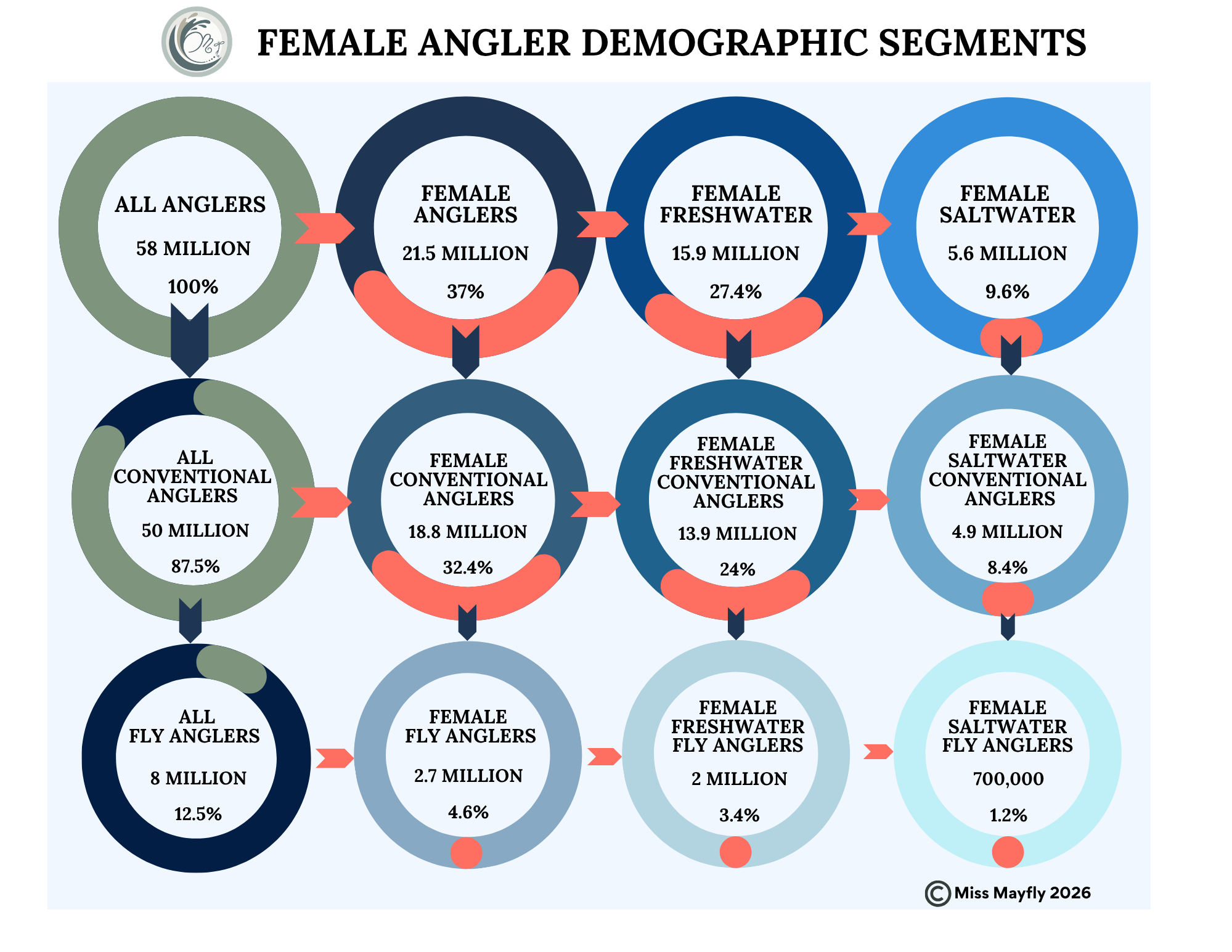
When viewed against the total U.S. angling population of 58 million, the female demographic becomes much smaller as it narrows into specific segments.
Women make up approximately 21.5 million anglers, or about 37% overall—a strong collective presence. However, the majority of these women, around 18.8 million, participate in conventional fishing.
As the focus shifts to fly fishing, the numbers drop significantly to approximately 2.7 million women, representing just 4.6% of all anglers. Within that segment, participation becomes even more limited in specialized categories such as saltwater fly fishing, where women account for roughly 700,000 anglers, or about 1.2% of the total.
This breakdown highlights an important reality: while women represent a meaningful share of the overall angling population, their presence becomes increasingly small—and less visible—within more niche areas of the sport.
What Needs to Change
This episode shifts the conversation from growth to sustainability.
To build a stronger future for women in fishing, we must:
Prioritize education, health, and safety to increase independence
Support one another across all differences—not just within our own circles
Invest in women-led businesses, guides, and competitors
Create measurable value that the industry cannot ignore
Because change doesn’t come from being included—it comes from being undeniable.
A Call to Imagine
This conversation ends with a simple but powerful idea—imagine.
Imagine if just 10% of women anglers united—what that collective voice could do.
Imagine if just 1% contributed in small ways to support competitive anglers.
Imagine if even a fraction chose to support women-led businesses, hire female guides, or invest back into this space.
The impact would be immediate—and impossible to ignore.
Because while women make up 37% of anglers, that value diminishes when we divide ourselves into smaller and smaller segments and cliques.
The opportunity is in unity. In support every woman angler- regardless of our differences.
And if we can begin to imagine what that looks like—we can start to change the future for women in this industry.
